Fools.

She looked at the neighbors and the mayhem ensuing in the mudpie their backyard had become.

“Fools. Somebody should tell them that everything referenced in the ‘Twelve Days of Christmas’ is a bird.”

Her wife reached around her from behind. Snuggled in tightly. Chin nestled into the space between shoulder and neck.

The raucousness next door had drawn a crowd.

“Let them find out on their own,” her wife said. “It’ll be a better story.”

The Twelve Days of Christmas: Mayhem of Prepositional and Conjunctive Proportions

On the first day of Christmas, my True Love gave to me a partridge in a pear tree.

Well this is nice, I thought. She’s a pretty bird, and I’ve heard the eggs are quite good, though smaller than chicken eggs. I’ve read that pear trees need to be planted in early spring, so I’m hoping that it will be alright in its container until then. Just to be safe, I’m keeping it on the porch.

“What kind of pear is it?” I asked.

My True Love shrugged.

On the second day of Christmas, my True Love gave to me two turtledoves and a partridge in a pear tree.

I ran out to the big box pet store and returned with a couple cages. I put the partridges in one and the doves in the other. The tree went on to the porch with the first.

“Good thing you bought a second,” I said, “because you need at least two to guarantee pollination.”

My True Love smiled.

On the third day of Christmas, my True Love gave to me three French hens, two turtledoves, and a partridge in a pear tree.

“Bresse chickens,” my True Love said. I was grateful they were already caged.

“Thank you, Love.” I stuffed the two newest turtledoves in with the other couple, and tossed the third partridge into the last cage. “You really want us to have some pears, don’t you?” The third tree went out on the porch as well.

On the fourth day of Christmas, my True Love gave to me four calling birds, three French hens, two turtle doves, and a partridge in a pear tree.

“You’ve really got a thing for birds, don’t you?” I asked. “Good thing we’ve got a bit of garden out back. Should we build a coop?” The four calling birds had their own cage as well, and they happily chirped away. But with a half dozen French hens and another half dozen turtledoves, I thought we might need to begin construction soon. The four partridges were certainly getting plump on the feed I bought, and the back porch was a bit crowded.

On the fifth day of Christmas, my True Love gave to me five golden rings, four calling birds, three French hens, two turtle doves, and a partridge in a pear tree.

“Now this is a bit more reasonable,” I admitted as I slid the rings on to my ring fingers, pinkies, and left index finger. The eight calling birds crowded their cage and we had to buy a second cage for the nine French Hens–“Bresse chickens,” My True Love reminded me.

We also purchased an extra cage for the eight turtle doves. The five partridges had needed another cage as well, and the entire living room began to take on a foul–pardon the pun–odor. I strung a clear sheet of heavy plastic against the house and moved the five trees under it.

“We need to buy lumber,” I announced, and began surfing the web for chicken coop blueprints.

My True Love said nothing.

On the sixth day of Christmas, my True Love gave to me six geese a-laying, five golden rings, four calling birds, three French hens, two turtledoves, and a partridge in a pear tree.

“Love,” I insisted, “you’ve really gone too far. What are we going to do with these geese?” My fingers shone brilliantly–ten gold rings on ten digits–but we had twelve calling birds, twelve … Bresse chickens, I reminded myself dutifully … ten turtledoves in two cages, but because we didn’t want to break up the couples, one cage held four and the other six, and a half dozen partridges, all befouling the house.

My True Love shrugged and smiled and began filling a plastic kiddie pool with water..

“Oh well, there’ll be plenty of eggs. That’s for certain.”

On the seventh day of Christmas, my True Love gave to me seven swans a-swimming, six geese a-laying, five golden rings, four calling birds, three French hens, two turtledoves, and a partridge in a pear tree.

“But this is simply too much!” I cried. “The seven swans not only swim, but snap and hiss at the neighbors, their dogs, and cats. I placate the neighbors with eggs from our twelve geese and our eighteen Bresse chickens. But the honks of our geese drown out the sixteen calling birds. I wish they might be quieter, like the cooing of the twelve turtledoves or seven grouse. Yes, those are grouse, which are similar to partridges but not quite the same.” I wrangled the seventh tree under the clear plastic, then wondered how my coop, still only half-built, had already become obsolete in the face of such numbers.

My True Love didn’t say a word, only diligently collected the scraps from our half-built coop.

On the eighth day of Christmas, my True Love gave to me eight maids a-milking, seven swans a-swimming, six geese a-laying, five golden rings, four calling birds, three French hens, two turtledoves, and a partridge in a pear tree.

“How can you give me people?!” I stopped one of the women who led her Ayrshire into my garden-turned-barnyard. “You know there are laws against this sort of thing?” She shrugged and handed me a pail of milk as her cow chewed my lawn. My True Love had assembled a water trough out of coop scraps. The cows drank from it until the swans started swimming in it.

No amount of rings, I thought, though I glittered more than ever. Still, where would I put the milk? The refrigerator was full of eggs, and I feared we would need to convert the downstairs into an aviary.

On the ninth day of Christmas, my True Love gave to me nine ladies dancing, eight maids a-milking, seven swans a-swimming, six geese a-laying, five golden rings, four calling birds, three French hens, two turtledoves, and a partridge in a pear tree.

I holed up in the attic doing math on a pad stained with dove excrement. One of the maids brought a cow inside to warm her up, and the beast kicked over some cages. We managed to get the nine partridges and twenty-one Bresse chickens out to the coop. No help from the dancing ladies, thank you. But sixteen turtledoves and two dozen calling birds made their way upstairs. So did some of the … two dozen geese. We’ve been finding eggs between the cushions, on the pillows, under the beds… and my True Love? My True Love just smiles and gives the neighbors milk to go with the eggs to keep them from calling the police on our twenty-four hour racket.

On the tenth day of Christmas, my True Love gave to me ten lords a-leaping. Yes leaping. Over the furniture, through the house, across the cowpat-strewn former garden. And another nine ladies dancing, eight maids a-milking, seven swans a-swimming, six geese a-laying, five golden rings, four calling birds, three French hens, two turtledoves, and a partridge in a pear tree.

The lords and ladies quickly assembled a performance set to lowing, honking, and clucking. Well-choreographed, I think, though I’m no expert on modern dance. Not my thing, really. The eight ladies who weren’t matched up with lords began juggling and tossing and posing with the eggs and milk, so now there’s room in the refrigerator again, or so my True Love says. I haven’t come down from the attic yet.

That evening, my True Love placed rings twenty-six through thirty on my fingers. I can’t move them anymore. Good thing a simple waving away only requires the wrist.

I smell French toast. Or is that French hen? I’m sorry. Bresse chicken.

On the eleventh day of Christmas, my True Love gave to me eleven pipers. Piping. All of them. And yet another ten lords a-leaping, nine ladies dancing, and eight maids a-milking. Where is my True Love finding so many people willing to be sold? I’m sure there’s a law, and the constable will be knocking any moment. There are also an additional seven swans a-swimming and six geese a-laying. All of them adding to the ceaseless racket. Five golden rings aren’t enough. How about earplugs, a cot, and a pillow that’s not soiled, so that I could have one blessed night’s sleep? Oh, and yes, just for fun, four more calling birds, three more French hens, two more turtledoves, and–no, you don’t say? Another partridge in another pear tree. Joy!

I am surprised that we haven’t been arrested or evicted yet. If I check my True Love’s accounts, will I find that we are penniless? Destitute? But the pipers’ sound is soothing after the first four … five … six hours. The animals seem to have calmed somewhat, and the smell of chicken and waffles makes my mouth water even up here among the turtledoves a-pooping and calling birds a-flapping and a pair of maids a-milking who thought they were alone and then tittered away red-faced when they discovered that they weren’t.

On the twelfth day of Christmas, my True Love gave to me twelve drummers drumming. More loudly and consistently than the pipers piped. But then, of course, my True Love so thoughtfully gave me eleven more pipers to match the sound. And another ten lords a-leaping over the broken furniture and chicken coop, nine ladies dancing on the overturned trough, and eight more maids a-milking eight more Ayrshires a-lowing. Seven more swans a-swimming, six more geese a-laying, four more calling birds, three more French hens, two more turtledoves, and another partridge, all set loose in the house, now fully a barn. And another blessed pear tree under the plastic. Five more golden rings? My True Love has got to be a-kidding.

For the record, I’ve now hosted twelve drummers, twenty-two pipers, thirty lords and thirty-six ladies, some of whom also juggle. Forty maids and forty Ayrshire cows, though perhaps only thirty-eight as those two who stumbled across my attic hiding place seem to have disappeared entirely, along with their cows. Forty-two each of swans and geese. I have forty gold rings all safely tucked in a paper sack to pawn, either for bail or to start my life anew somewhere else. Thirty-six calling birds flapping through the eaves. We had thirty French hens, but many mouths to feed. The twenty-two turtledoves have mostly flown the coop as well. And the dozen partridges? Dinner, too, by the smell.

But it seems I also hosted a forty-eight hour music and dance extravaganza, during which time the drummers and pipers did a bit of community service and planted those dozen trees in that damp, muddy, well-trodden, well-fertilized earth. And it seems my True Love sold tickets, and food and drink besides. It was a smashing success, apparently, and all that remain in the new pear orchard are a real estate agent, my True Love, and I.

“The neighbor wants to buy,” the agent says. “The house is a barn now, true, but the land, the orchard, he wants it all. Strangely, he’s willing to pay top dollar.”

“Probably to get rid of us,” I say.

My True Love shows me the bank deposit slip from our impromptu celebration. It’s more money than I’ve ever seen.

I think I just had an epiphany. We may do it again–some place new– next year.

Mason Hall. Three.

The woman who came to retrieve Cara was neither as deferential as Penny nor as icy as Ms. Carrington. In fact, with her mass of black hair held back with a white bandanna and her faded sweatshirt and denims, Beatrice Thurmond looked too laid back, too chill to be a supervisor. She gave Cara a warm smile.

“You look like your Mom. And you got a touch of your Pappy in you.”

“You knew Pappy?”

She nodded as she ushered Cara through the double doors. “Your Mom and I grew up together. She didn’t say?”

“She said I had an opportunity that I shouldn’t waste.”

Bea laughed. “That’s your Gran speaking. Audrey was always torn between those two. Loved her Daddy, but feared her Mama more.”

“Sounds about right,” Cara said.

They passed through the great room, where Ms. Carrington dealt with a fussy-looking old man in a bathrobe. Mr. White waited at the foot of the stairs; he gave Cara a slight nod and a smile, which she returned.

When Bea opened the door to the administrative wing, she took note of the scene unfolding in the great room.

“Did you come in with Mr. White?” She asked.

“You know him, too?”

“He’s a regular,” Bea said as they walked.

“Ms. Carrington doesn’t seem to like him.”

“Mm hm. Which brings us to rule number one about working in Mason Hall. What Ms. Carrington says goes.” Bea opened a door and led Cara into a plush looking office with strong wood furniture. But something didn’t feel quite right.

A pair of leather wingbacks had been placed opposite the heavy desk. The two women sat there.

“It’s a real nice office.”

“Carrington does like to make sure she has the best.”

“Oh.” Cara surveyed the room again and realized what felt so wrong.  There wasn’t a single photograph or personal effect anywhere. No knick-knacks. Generic paintings of landscapes. Not even a plant or a vase of flowers.

“But it doesn’t feel very friendly.”

Bea pursed her lips. “Make sure you don’t say that in front of her.”

“Huh?”

“Be deferential. Better yet, in Ms. Carrington’s presence, a smile and nod do better than a word. Got that?” Bea was suddenly stern, all traces of friendliness gone.

“I feel like I’m about to be fired.” Cara stared at her pumps. “Which is strange because I haven’t even been hired.”

Bea sighed. “This isn’t how I wanted to bring you on board.”

“No?”

“Nothing about this is standard, Cara. I would have interviewed you on my own, in the staff room, the way I interviewed the other folks on Housekeeping. Carrington leaves well enough alone when it comes to us. Be seen and not heard. Report problems promptly. Can you do that?”

“Of course I can.”

“I know it. Audrey wouldn’t have raised a fool, I don’t think. Not with parents like hers.”

“So why are we meeting here?”

“At a guess, I would say it was because you walked in with Mr. White. So now I’m going to ask you to do something very important.”

Cara examined the leather chair arm and nodded. “Uh huh.”

“No matter what Mr. White said or did—“

“He didn’t say or do anything.”

“No matter what Mr. White said or did, he only said good morning and sheltered you from the rain. Got that?”

Bea had a look of determination that reminded Cara of her mother, or of Gran.

“Well that’s easy enough. That’s all he did.”

“Good.”

The conversation turned casual then, as if Bea had turned a switch from formal to casual. Even when Ms. Carrington arrived wearing that same slippery smile she gave Mr. White, Bea remained casual. Quiet, yet casual.

Mason Hall. Two.

Days like this made Cynthia want to scream. The pounding rain. The flooded inbox. A leak in the west wing. Supply delays. State inspectors. Staffing issues. Mrs. Grant’s vendetta against Mrs. Cornelius. Mr. Oliver camped out in the great room. A dozen other residents with twice as many needs and complaints. And God forbid …

She glanced out the window.  “Christ,” she said and picked up the phone. “White’s at the door, along with a girl. Hold them.”

The person on the other end spoke briefly.

“I don’t care. Just keep them there.”

Mr. Oliver, still in his pajamas and bathrobe, climbed from his usual leather chair and shuffled toward her as she strode across the room. He waved at her, mouth already moving.

“Ms. Carrington, I—“

She held up a red-taloned finger. “I’ll be with you in a minute,” she replied.

He backed off. “Oh, oh. Okay.”

Like the rest of the great room, the doors to the foyer were dark wood and brass. Heavy. She pushed one open and slipped inside, She pulled her blond hair behind her ear and adjusted her glasses as she approached the pair.

“Mr. White. Good to see you again.” She reached out her hand. 

He watched her hand as she approached, like it was something dangerous. Then took it quickly, stopping her short. “Ms. Carrington,” he said. 

“I assume you’re here to visit with Mr. Mason?”

“That’s correct. I left my umbrella in the rack, as usual.” 

“May I take your coat?” She motioned to the small, empty coat rack.

Mr. White still wore his rain-spattered topcoat. “I’ll keep that with me, thank you.”

She smiled thinly. “Then let me escort you upstairs.”

“I know the way.”

“Just the same,” she said. “It would be my pleasure.” Cara didn’t think Mr White was nearly as friendly with Ms. Carrington as he had been with her.

Carrington turned to the attendant behind the glass, a mousy woman who seemed to shrink even further away.

“Penny, I’m going to escort Mr. White to Mr. Mason’s quarters. Would you please have Bea come to escort Miss Baker to my office.”

Penny picked up the phone—Cara assumed she was dialing Bea, as Mr. White and Miss Carrington disappeared through the doors. 

Mason Hall. One.

“If you had only listened to Granny, you could be off to college, too,” Audrey chided as gently as she could. 

“If I wanted a degree in nursing or teaching or business, yeah.”

“Those are perfectly respectable careers.” Audrey pushed the pantsuit into her daughter’s hands.

Cara groused. “But they’re not me. I want to be on stage. I want to sing. Dance—”

“Sleep on a grate in Center City.”

“Mom!”

“I never said you couldn’t sing and dance and get on stage.”

“Granny did.”

“Mm-hm. Because she don’t want you sleeping on that grate. And neither do I. You need a fallback.”

“And scrubbing old people toilets in Mason Hall is a fallback?”

“Until you find something better. And maybe it’s enough. But I can’t have you melting into my sofa with no job, no career, no hope. So until you make a plan, Mason Hall it is.” 

Audrey had given her daughter a week after graduation to enjoy her newfound freedom, then snatched it away with a word from her sometimes-friend Beatrice. Cara’s classmates had gone to Temple or CCP, but her friends—what few she kept up with—had mostly entered a desperate post-pandemic workforce where jobs were plenty but living wages scarce. A few of them had already made the arrest columns in the Inquirer or the Daily News. One was already in his grave.

“You can’t do an interview dressed like a hobo,” Audrey insisted. 

“It’s ragamuffin,” Cara corrected acidly. “Check with Granny.” 

“Your grandmother just wants what’s best for you.”

She looked away so that her rolling eyeballs wouldn’t cause a fight. She was already treading on dangerous ground. “It’s just a part-time job. Housekeeping.”

“It’s still a job,” Audrey insisted. “At Mason Hall.”

“My jeans are fine for Mason Hall.” Some part of her had given up, willing to fulfill the ragamuffin description.

Audrey hauled her only child to the bedroom. “No. Beatrice says you could be a shoo-in for this. You leave nothing to chance.”

Now as she sat in the car, she found a new worry. “The torrential rain is going to dash Audrey Baker’s hopes,” Cara muttered. 

Sheets of water battered the windshield, smearing her view. The red bricks and black shutters of Mason Hall, a mansion-turned-assisted living facility, were geometric splotches of color masked behind white and bright green streaks of young summer birch trees. The scene ebbed and flowed with the downpour.

Cara could not have felt more out of place, dressed in her mother’s second-hand navy pantsuit and battered pumps the color of mud. Well, that might actually be mud, thought Cara, as she reached down and brushed at her leg. It was a dash from their row home across the puddles to the ’83 Chrysler Malibu Audrey had inherited from her late father and that Cara, in turn, had come to own. 

“Pappy’s car. Mama’s clothes. You really are a wreck.” She twisted around, searching the back seat for an umbrella. The jacket was tight where she wanted it loose; loose where she wanted it tight. No umbrella.

A shadow filled her driver’s side window. A rap on the glass. She turned to see the smiling face of an old man under an oversized red and white umbrella. She rolled the window down slightly.

“Can I help you?”

“Saw you pull in,” he said. “I’m guessing you’re short an umbrella?”

“Yeah.”

There was a twinkle in his eye. His hair was close cropped and gray. He smelled strongly of aftershave. His tie was wide and his topcoat old. He reminded her of pappy. “May I escort you inside?”

“Thank you,” she said and rolled up the window. He stepped back so she could exit, and together they braved the weather.

Meditation: Social Media, Writing, and the Pursuit of Authorship

Hi all:

I know it has been a while, and my apologies for that. I used the holiday season for some much needed rest and recuperation, and to unplug from social media a bit. But now in the past few days I have checked my Facebook (*gag*), Twitter (*more gagging*), and Tumblr (*smdh* If you’re gonna spambot me with scantily clad people, could you at least make them Scott Evans, John Barrowman, or (sweet mother of god) Jonathan Groff ???). Thus, it’s time to start recommitting. The holidays are over.

I have a manuscript I’m shopping and two works-in-progress I wish to make significant progress on this year: A short story horror collection inspired by Ray Bradbury’s October Country and a Sci-Fi Wartime Refugee novel inspired by Bela Bartok’s Romanian Folk Dances. There’s creation to do in all its aspects of work and play. but before I get to that, I’d like to take a meditational-historical-intellectual detour. Maybe to vent. Or purge. or something. Bear with me. This is first draft ground.

Decades ago, I studied technology as a tool for teaching writing. I read 1990s texts about the digital age: Negroponte’s Being Digital, Clifford Stoll’s Silicon Snake Oil, Janet Murray’s Hamlet on the Holodeck, and others. Twenty-five plus years later, I find myself at an interesting crossroads: while my engagement on social media is proliferating once again, I find myself more averse to it than ever before.

I have or have had accounts on Facebook, MySpace, Twitter, Tumblr, Second Life, Mastodon, and spent a brief period of time engaged in Object-Oriented Multi-User Domain design and construction. I have avoided Instagram and TikTok only because I work in the written medium for the most part, and what visual offerings I have are static, amateur, and not really worth displaying. Should I ever follow my dream of storytelling and poetry reading in video form, I may reconsider those social media options.

I remember sitting in a meeting, maybe ten or so years ago, where a young man in his too-cool grad student phase (I should know; I went through it myself) all but labelled me a luddite for not indiscriminately adopting every possible use of Twitter in my classroom. Of course, it didn’t help his cause that I greeted his assertion of its significance in the digital age with skepticism. He did, of course, suggest that I might be left behind by my resistance to full-throated endorsement and adoption. I suggested in turn that I was never a very fast adopter, could be clumsy and tended to watch my feet, but that although slow, I got where I needed to be in good time nonetheless. I haven’t changed.

My only reason for engaging social media at all is that I like telling stories, and I hope to publish my works. Therefore, I need web and social media presence. I’ve tried it before, and flamed out spectacularly. I find that devoting time to writing on social media detracts from writing the actual stories and manuscripts that I want to publish through a publishing house. I am trying to break that habit with this blog, which I link to social media platform accounts under my pen name. I question the value of such an effort, but every time my manuscript goes out or I read an agent blog or review Duotrope or QueryTracker, I am forced to concede that this is a necessary evil. Which is silly. Technology is neither good nor evil; it just is. Good and evil are in the implementation of technology–anything, really–in relation to personal and civic values. Still, a desert island looks really good these days.

The disinformation and misinformation age is upon us. Well, it has always been upon us, but the tools are really expanded and the people less inclined to critical thinking and textual analysis right now. Digital attacks, photoshopping, bubble communities, and the like have moved me from patient adopter to “only if I absolutely must” status. Yet if I am determined and desperate enough, I can publish my work without the industry–via online platforms, self-publishing routes, or simply by posting here. They are not my first choice, because I still aspire to the cachet and support that comes with the traditional process. To me, agents and editors form a valuable part of the publishing chain. That’s a statement many people would be inclined to disagree with, and a belief that may not stop me from self-publishing larger works in the future. But I’d like to reflect on the value of the traditional process a little further.

In The Rise of Writing, Deb Brandt suggests that we may have moved from a culture of readers to a culture of writers. In her interviews with a wide range of people (99, I think) across a variety of professions and stages of life, she discovers that although they generally don’t call themselves writers, they nearly all use writing. For years I heard it from my students: they weren’t writers, but they used writing all the time. My experience has suggested that people call themselves writers depending on the kind of writing they do. “Functional” writing–classwork, grocery lists, letters to grandma-don’t make you a writer. But engaging in the creative process and generating fiction or poetry or “creative” writing? That makes you a writer. because so many people don’t value their own creative capabilities as writers, they rule themselves out from the identity. I think people should take more inspiration from Brenda Ueland. But perhaps I am speaking too soon?

When I focus on a culture of readers, I think of a society in which many people read and fewer people publish–maybe they always wrote, but Aunt Gardenia’s rhyming couplets claiming that her colorful English garden was the divine product of a toga-wearing white guy on a cloud probably wouldn’t have made most of the cuts. The discernment about what was quality enough for civic consumption and what was not was made by agents, editors, publishers, and the like, and their range of influences depended on their location and finances. More money = bigger press in a major city with big reach. Less money? Tiny press. Specialized. Maybe even radical.

This is the way things were.

Now, we are in a more tragic and hopeful culture of writing in which everyone writes but no one reads with discernment. Everybody has a mommy blog or a garden blog or a Facebook page of fictionalized stories of nationalism and religious fervor and incessant tweeting anti-conservative, anti-liberal, your dog is a bastard, my T Rex ate your zombie family crap. There are gobs of “writing” out there, but now, instead of crazy Uncle Earl penning off-color stories on a yellowed legal tablet that he only recites after too much moonshine, Earl can put that stuff on the web for mass consumption. Every crazy thought, every unscrutinized idea can be published in one capacity or another, with varying levels of crafting, care, attention to detail, wordsmithing, etc. Some of it’s good. Most of it isn’t.

Like that Nihilist pablum your angsty younger brother has been writing in the basement? It’s now available to his angsty angstmates all over the country, who link in with other angsty people of varying ages, though mostly of one gender and race in the U.S. Et voilá! Crap, hateful ideologies and radicalism available for mass consumption. While some of us get radicalized, the rest of us gobble down Aunt Gardenia’s poetry or Uncle Earl’s stories so we can sing her praises or titter behind his back at Christmas or over tea. Tragic.

This is not to say hopeless. I did say the situation was tragic and hopeful, didn’t I? Sites like Webtoons and AO3 provide fertile ground for writers and artists to develop their skills and tell the stories they don’t see anywhere else. And unlike the social media goblins who create bubbles of sycophantic followers who read without question, these platforms have a process of discernment–monitors, reviewers, editors–betas, they call them in the fanfic world–who try to ensure content and quality according to some standard. Don’t like the standard? Find a new platform. Agents, editors, and reviewers have persevered into the “culture of writing” phase of this digital age, and their discernment is key. Where artists and authors want quality, editors and reviewers have been recreated.

So what am I actually trying to say, and what does it mean for me as a writer trying to publish in a traditional manner? Here’s what I think I think:

  1. This “Culture of Writing” is recreating the traditional means of discerning publication quality to some degree, and it’s a good idea to submit to that process for your own benefit. Therefore–
  2. We should take the time to scrutinize ideas and posts, even if only first draft material like what you’ve just read. Feedback from a quality reader is important. Don’t just leave this to your mother (Mine loved me quite a lot, and loved what I wrote, even when it was trite, queasy, pimple-scratching stuff).
  3. I am opening posts up to comments from now on–I didn’t do that before. We’ll see how it goes.
  4. I hate being on social media, but if I want to publish, I need to have a presence here in some meaningful capacity.
  5. In order to increase the value here, I am considering writing a full length work specifically for this medium, so that I have a standing obligation to developing my writing in this space, even if that means I can’t turn around and publish it later through traditional means.

Okay. I think I’m done griping. Let’s see what happens next week. There’s a story about a mansion-turned old-folks-home in suburban Philadelphia that I’ve wanted to tell. A sinister figure lives among the residents. An odd, shuffling delivery man who spends more time listening to the song in his head than minding the present has arrived, and he has brought a small, strange package…

Watcher

I always click the button that locks the door until my Subaru beeps. It beeps twice, and sometimes, if the mood is just right, I keep hitting the button as I sing “Tainted Love”, the timing and rhythm perfect, as if we are singing together. And that’s what I’m doing as I cross the desolate wet parking lot toward the shabby four-story hotel.

This rust belt town is grim, on its knees, leather work gloves resting on a scratched yellow hardhat, exhausted and panting, trying to get to its feet. The hotel–part of a low budget chain–has seen better days. There are desperately-needed renovations going on inside, and a dumpster the size of a big-rig trailer and several construction vehicles are parked at the darkened end of the lot. Not all the lamps work, and why bother? The interstate with its high halogens sits right there on the other side of a steel and concrete barricade. That’s enough.

My clients asked where I was staying. When I told them, they shuddered. “That’s kind of a halfway house,” they said. “The addicts and homeless often end up there.” I did not offer that once, in another life, I had helped run a little house church, and the men from the halfway house next door had been regular attendees. The men laughingly called me pastor, and I laughed along, because I might be the worst candidate to shepherd any flock anywhere. Ever. People with problems are not the problem; systems that exacerbate problems are.

The car beeps along merrily when I notice him–the shadow of a hooded figure, a man in a rain poncho of some kind–looking down at me, hands pressed against the glass of a third floor guest room window. No discernible features. only darkness where his expressions should live.

The song dies on my lips. In my hesitation, the imagination my steelworker father so often condemned as overactive revs into high gear. Scream. Psycho. The Shining.

I take three more steps and pause between two puddles, my eyes never leaving that darkness where his face must be.

He doesn’t move.

I began calculations, eyeing the structure. Distance to the lobby. Distance to my room adjacent to the second floor stairs. Time it takes to climb those stairs with my briefcase, wearing my slick-soled dress shoes. Distance from his room to the same stairs. Probability that he would correctly guess I had parked closer to the side where my room was located so that I could see it from my window.

I keep watching, my neck craning until I enter the building, until he disappears from sight. The lobby is tiny, brightly lit, and the young woman at the counter has headphones on. She nods as I pass. Once I round the corner, I scurry down the hall to the stairwell closest to my room. On the second floor landing, I hear the fire door open on three. I slip into the hall, run my card key through the slider on my door, and breathe a sigh of relief when it is closed, bolted, and chained. Just my imagination. Yeah.

A shower and a change of clothes later, I settle at the desk to complete the day’s paperwork. That’s when I hear the fire door, followed by a whistle. It’s the tune I had been singing not an hour earlier. The whistler stands just outside my door. I see the shadow of their feet through the crack. There is no peephole. I switch off the light. The whistler leaves the way he came.

I spend the next several hours watching my car through a little opening in the drapes. My room is dark. No one can see me. Just me in the chair and the car and the mostly empty, half-darkened, puddle-ravaged lot. My accursed overactive imagination and the lamps of the interstate. The scattered showers that come and go. An occasional car or truck headed up the mountain, away from the town. A figure–a man in a ball cap and hoodie–walked by my Subaru earlier, during one of the lulls in the rain. Paused in front of it but didn’t touch it. Was he the same person I saw in that window? I don’t know–probably not–but the longer I sit, the more uneasy I get, the more I wonder if I’m somehow part of the problem. No. It’s just my imagination. It must be.

WIP Snippet: The Woods

Hi readers: Just for fun, I’ve scratched out this little piece. Not sure if it’s the intro to a current Work-in-Progress or the beginning of a story in its own right. Hope you enjoy it.

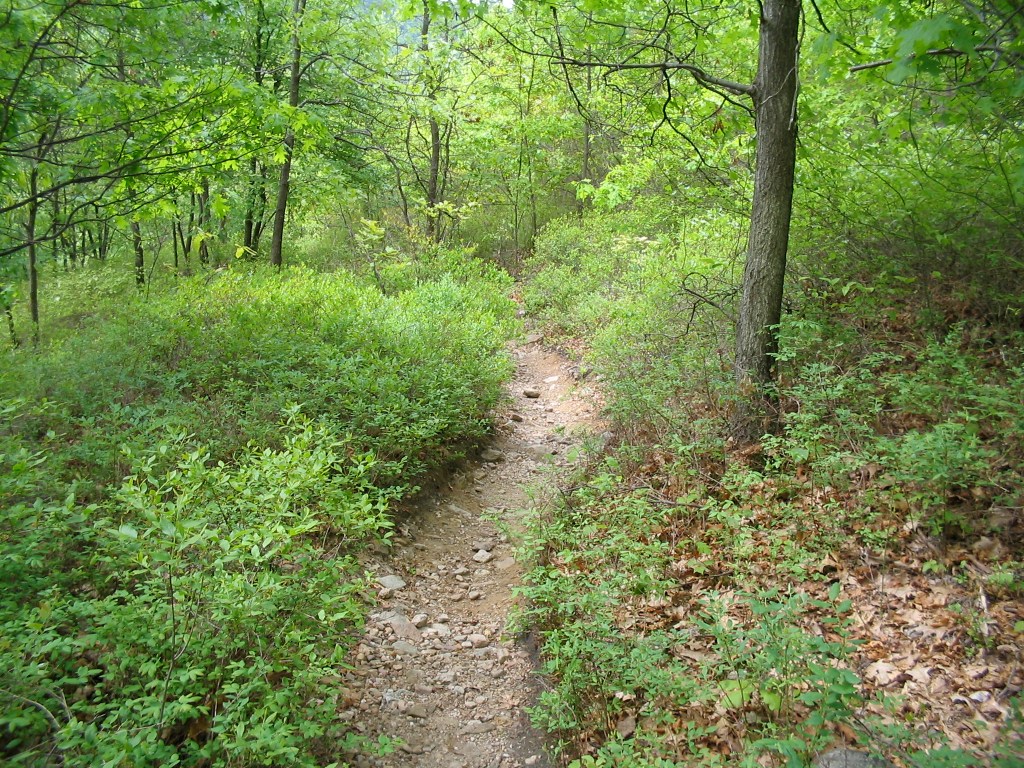
PS. This photo–like all photos and art on this site–is one of mine.

I often think the best days of my life were spent in the woods. Tromping soft detritus-littered trails by the run—run, yes, for it was too small to be a creek. Turning over rocks on a still summer day to find salamanders or crayfish in slow water. Listening to the rattle of browning leaves already past the fiery tones of autumn, waiting for the first crisp wind to cast them down in a cascade. Plucking cicada husks from birch bark. The blue of shale poking out from striated dirt. Chewing honeysuckle or sassafras. Petrichor and rotting stumps. Searching for the feathers behind whistles and twits with my hereditarily bad eyesight.

It was heaven, even when we had to leave it for chores or homework.

But the woods are sacred on an archetypal level, that space where we grew, explored, adventured, and discovered a world larger than our father’s crumbling farmhouse. Shadows moved in the dark of the woods at night, and hoots and howls evoked more from the imagination than owls and wolves. Baba Yaga, the Erlking, the Gingerbread Witch. The woods—our woods—could be where they waited.

Of course not. That’s silly.

The county history book tells of a woman who was slaughtered by the indigenous tribes in the mid-1700s, perhaps right there in the woods behind our house. I have wondered if more than once we played in her shadow—the natives left her hanging in the trees. Despite my love of the woods, the story reinforced a simple fact: woods are dangerous. That knowledge, and the details of the old tale, and my tendency to believe in the things we can’t explain, made me sometimes reluctant to look up. 

A Visit to October Country

Well. If you read my last post, you’ll know that I’m now shopping a novel manuscript that I thought I had completed two years ago, but then got enough similar feedback that I decided to re-teach myself the fundamentals and hire an editor so that I could revise it properly.

Now that the shopping–and praying, hoping, begging, and negotiating with any of several greater and lesser deities–is underway, I am turning my attention to my next projects. Yes, plural. I can’t remember if it was something I read of Neil Gaiman’s, or something he said at his talk in Boston earlier this year, but I have this sense that he keeps two projects on the fire at any time. So here are are mine:

First, know that I have three other manuscripts in various states of outline and draft. One is a bit of an unconventional superhero story. The second is a supernatural horror and adventure tale. Both are interesting, and I’ll get around to them yet, but my priority novel project is a science fiction novel on a far away planet in the distant future. There is a global environmental disaster, a certain penchant for tradition, and a crashed battleship engaged in a war unrelated to the planetary inhabitants. There are three sisters, a brother, and whole lot of squabbling. And there’s a city, and a nunnery, and a cave in the mountains. And a great deal of mis- and non-communication. We’ll see how they combine together.

But while I’m working on that, I’ll also be working on a collection of short stories. See, it goes like this:

As I was searching for agents, one of them expressed a desire on her website to find the next Ray Bradbury’s October Country–a collection of macabre short stories that illustrate both Bradbury’s fantastic prose and, unfortunately, a 1950s mindset that doesn’t fare well in light of a modern understanding of human diversity. Human condition? Yes. Human diversity? No.

Now, this is not my first experience with October Country. Several years ago, I was actually in a stage production based on some of his more accessible tales, and on opening night he called us from his home in Los Angeles to wish us well and to break a leg.

So here I am, reading this agent’s website, reminiscing on the past, and thinking about my own pile of short story efforts that could use some crafting and rethinking. And I thought, well, why not? So I purchased a copy of the book and have been alternating between reading stories and crafting my own tales built from little kernels of idea stuck between the teeth of his prose. It’s really a joy to me, because I love his prose, and he, along with Ursula LeGuin and Neil Gaiman, command the style of prose I would most like to emulate.

So here, to celebrate my embarkation on my next writing journey, is the opening to his collection, a piece that we used to open our own play.

October Country

. . . that country where it is always turning late in the year. That country where the hills are fog and the rivers are mist; where noons go quickly, dusks and twilights linger, and mid-nights stay. That country composed in the main of cellars, sub-cellars, coal-bins, closets, attics, and pantries faced away from the sun. That country whose people are autumn people, thinking only autumn thoughts. Whose people passing at night on the empty walks sound like rain. . . .”

Before I slip off to the Dreaming this evening, I did think I would answer a question you might have on your mind: what will Nic do if the agent doesn’t accept his collection? Well, easily enough–I’ll shop it elsewhere. And yes, I’m trying to land the individual pieces in literary journals as I write them.

Two Years Ago…

Two years ago this month, I shopped my manuscript to a handful of agents. By handful, I mean six. Two of them I had been in touch with via the Boston Writing Workshop. They both had the same response to my manuscript: “Loved the premise, but the writing isn’t what I’m looking for.”

I spent all of about fifteen minutes pondering what that meant and poring over my manuscript. Very quickly, it became apparent that I depending on some words more than others, that I wasn’t letting the reader immerse in the scenes, and that my turns of phrase were at times awkward.

It would have been easy to give up. I read Twitter often enough to know that others have felt the same way, and for lesser hurdles. But what drives me is the story, so I took steps to fix the issue.

First, I took a break from the book to study my writing more, and to study the writing of others. I used LeGuin’s Steering the Craft to work through my way with words. I’ll probably do it again this winter.

Second, I read—voraciously. For the first time in a while. I read all of the EarthSea Cycle. Radio Silence. The Temperature of Me and You. Divine Secrets of the Ya-Ya Sisterhood. Running with Scissors. The Stationery Shop. The entire 12 graphic novel set of Sandman. Parts of Lives of Girls and Women. Possessing the Secret of Joy. The Things They Carried. The stack of books by the bed is no smaller than it was before. I read like I was a thirsty man in the desert, desperately searching not just for story, but for words. Rebecca Wells’ reliance on scent. LeGuin’s exercise in warm colors. Munro’s description of a country road. I don’t know that we remember every word in a story. We remember the feelings words evoke, and that’s part of the challenge of writing: Did you get the precise words to capture the exact feeling?

The third thing I did was hire a former colleague as my editor. She did a no-holds-barred analysis of my manuscript, questioning anything that she either could not follow that did not ring true. She held up the mirror … no. She held up the magnifying glass, and made me look closely. In the process, she made me a better writer.

So why am I saying all this? No, I did not find an agent. Not yet. But I did begin shopping my manuscript again this weekend. I will shop it to more than a half dozen this time. There is no guarantee I will succeed, but there are always other options for sharing a story. And that’s where my allegiance lies: to telling a good story that people will want to read. In the meantime, I’m on to the next project, because … well, there’s always more to write, isn’t there?